Farm & Feast Recipes, Extras, and Tonight's Menu
Unlock dishes in the book, then pin only what the pantry and chefs can finish.
Cooking in Farm & Feast is a planning skill more than a button-mashing skill. You study a recipe book, you pin a live Menu, guests order from that board, and chefs fire the plates while you run the floor. Steam never asks you to chop onions in a QTE for every dish. It asks you not to offer Pho if the pantry cannot support Pho. This page decodes the book, the extras, and the prices visible in official demo screenshots. Use it with restaurant service at night and with farming in the morning.
Recipe book versus Menu board
They are two screens.
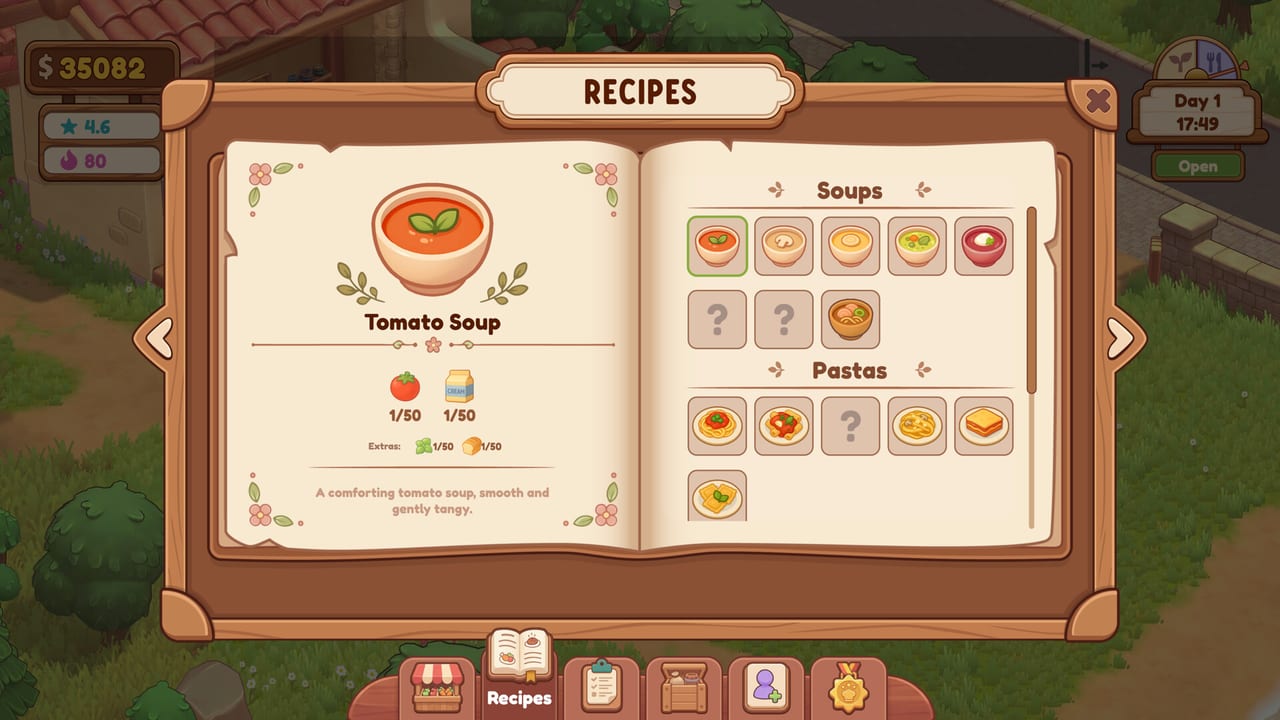
The Recipes book (hotbar icon of an open cookbook) is knowledge. The left page of the official shot shows Tomato Soup: a bowl with basil, ingredients tomato 1/50 and cream 1/50, plus extras tracked as 1/50 each, and the line “A comforting tomato soup, smooth and gently tangy.” The right page tiles Soups and Pastas, with several question marks still locked.
The Menu clipboard is tonight’s offer. Today’s Menu on the left lists what guests may order, including locked slots. Available Dishes in the centre show prices and remaining plates. Selected Dish on the right breaks down ingredients and extras. Open Restaurant lives on this screen. If you pin dishes here that the book barely understands, the ticket strip will stall.
Keep the book wide and the board narrow.
Tomato Soup is the teaching recipe
If you learn one dish, learn Tomato Soup. It spends farm tomatoes and market cream. It is the cleanest proof of the farm-to-table promise: you watered a bed in the morning so a bowl could exist at 19:00. Stock cream in x5 packs from the Dairy tab ($2.50). If soup is on the board and cream is zero, you are about to apologise to a table.
Other soups visible on the Menu shot:
- Vegetable Soup — $7.77, extras can include garlic and parsley (Take Order shot).
- Borsh — $9.03
- Pho — $10.46
- Mushroom Soup — appears on Today’s Menu in the same screenshot
Higher soup prices are not automatically better. Pho at $10.46 is a gift only if the pantry holds whatever dummy dino assigned it. Until the book spells every ingredient, treat expensive soups as unlocks to test on a quiet evening, not as day-one defaults.
Pastas and the pizza row
The Menu screenshot is the best public price list we have:
| Dish | Price on demo UI | Notes from the shot |
|---|---|---|
| Spaghetti | $5.36 | 30 remaining in the tile |
| Rigatoni | $6.14 | Detail pane: pasta 1/30, tomato 1/47, extras garlic / basil / thyme |
| Mac & Cheese | $6.90 | 15 remaining |
| Fettucine | $9.59 | 30 remaining |
| Lasagna | $11.89 | 10 remaining |
| Ravioli | $13.97 | 10 remaining; selected in the shot |
| Margherita | on Today’s Menu | pizza row |
Rigatoni is the pasta the Take Order UI loves to demonstrate, extras and all. Ravioli is the expensive flex. Lasagna sits near it. If your tomato count is fragile, Spaghetti or Rigatoni is the adult choice. If dairy is overflowing after a market binge, Mac & Cheese starts to make sense. Rankings by friction live on the dish tier list.
A sandwich-like tile also sits on the pasta page of the recipe book. Do not assume it is a pasta; wait until the book names it on your save.
Extras are not garnish
Take Order shows extras as tiny ingredient icons on the customer ticket and as chips on the selected dish. Garlic, basil, thyme, parsley appear in the official art. Steam’s warning about forgotten requests is this system. If the guest wants thyme and you confirm without it, that is a wrong dish even if the bowl looks similar.
Stock extras in the market when you see them under Herbs or Veggies. Olive oil and BBQ sauce sit in the Dairy tab of all places ($7.00 x5) — dummy dino’s shop is a general grocer, not a perfectly categorised spreadsheet. Buy what the book counts, not what the tab title suggests.
Available counts and locked slots
Each Menu tile shows how many plates you can still fire. Ravioli at 10 remaining is a limited evening. Spaghetti at 30 remaining is a workhorse. When a count hits zero, take that dish off the mental board even if the slot is still pinned.
Locked slots on Today’s Menu are a design gift. They stop you from offering eight dishes on day two with $1,570 in the till (that cash figure is on the same Menu screenshot). Three live dishes plus drinks will carry a six-table room. Unlock more after the market and the farm agree.
A practical pinning rule
Before you press Open Restaurant:
- List every ingredient on the pinned dishes, including extras.
- Check farm counts (tomatoes, carrots, greens) and market counts (cream, noodles, cheese).
- Drop any dish that spends a singleton ingredient you cannot replace tonight.
- Keep at least one cheaper pasta or soup so a full queue does not depend on Ravioli’s ten plates.
- Confirm drinks exist. Cooking will not save a dry fridge.
Then open. Let chefs plate. You return to running, as the restaurant guide describes.
After service
See which tiles hit zero. That is tomorrow’s farm list and tomorrow’s grocery list. If Tomato Soup vanished, plant tomatoes and buy cream. If Rigatoni extras ran out, buy herbs. Do not unlock a new pasta as a reward for chaos. Unlock it when the day planner has a row for its ingredients.
Cooking in this game is a promise printed on a wooden clipboard. Keep the promise small enough to keep.
Frequently Asked Questions
Quick answers about the Farm & Feast demo and the 11 Nov 2026 Steam launch.
Where is Tomato Soup in Farm & Feast?
In the Recipes book. The official screenshot shows tomato plus cream, with extras tracked separately. Pin it on the Menu only if both ingredients are stocked.
What is the most expensive pasta in the demo shots?
Ravioli at $13.97, then Lasagna at $11.89. High price is not the same as high profit if counts are low. See the dish tier list.
Do extras matter?
Yes. Take Order lists garlic, basil, thyme, and parsley on example tickets. Steam says forgotten requests upset guests and hurt reputation.
How many dishes should I pin?
Two or three on a first demo evening. Locked menu slots exist for a reason. Expand after the pantry and the market catch up.